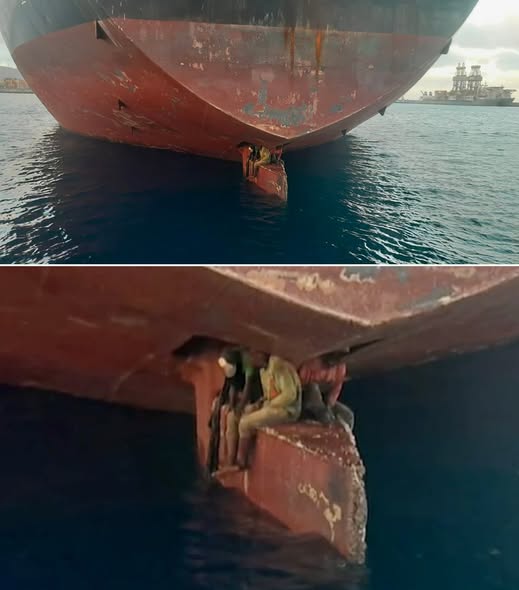

In the vast expanse of the Atlantic Ocean, three men from Nigeria embarked on an incredible journey that would test the limits of human endurance, determination, and sheer willpower. They survived 11 days clinging to the rudder of a massive oil tanker, the Alithini II, as it made its way from Lagos to Spain’s Canary Islands. This harrowing voyage, which covered more than 2,700 miles, is a story that defies belief. It is a testament to the lengths people will go to when they’re chasing even the smallest chance of a better life.
This is the extraordinary tale of survival against all odds, a story of hope in the face of unspeakable adversity, and a reminder of the harsh realities faced by many migrants seeking refuge in Europe.
The Escape: A Journey of Desperation
In many ways, this journey began long before the three men found themselves clinging to the rudder of the Alithini II. It began in Nigeria, a country plagued by economic instability, political corruption, and limited opportunities for millions of its citizens. For many young people in Nigeria, the dream of a better life lies in Europe, where prosperity, safety, and opportunity seem just out of reach. However, the path to that dream is fraught with peril, and for some, the only way to reach Europe is through illegal and incredibly dangerous means.
The three men, whose identities remain largely unknown, were driven by desperation. They had no food, no shelter, and no resources to make the long and perilous journey across the sea by conventional means. The story of their escape began with the same longing for a better future that has driven countless others to undertake perilous journeys across the Mediterranean, through deserts, and even on dangerous boats.
For these three men, there was no other option. As is often the case with migrants fleeing hardship, the risk was worth the potential reward. They found their way to the port of Lagos, Nigeria, where they managed to stow away on the Alithini II, a massive oil tanker making its way toward the Canary Islands, Spain. Little did they know that this vessel would become their lifeline and their prison for the next 11 days.
Life on the Rudder: Struggling to Survive
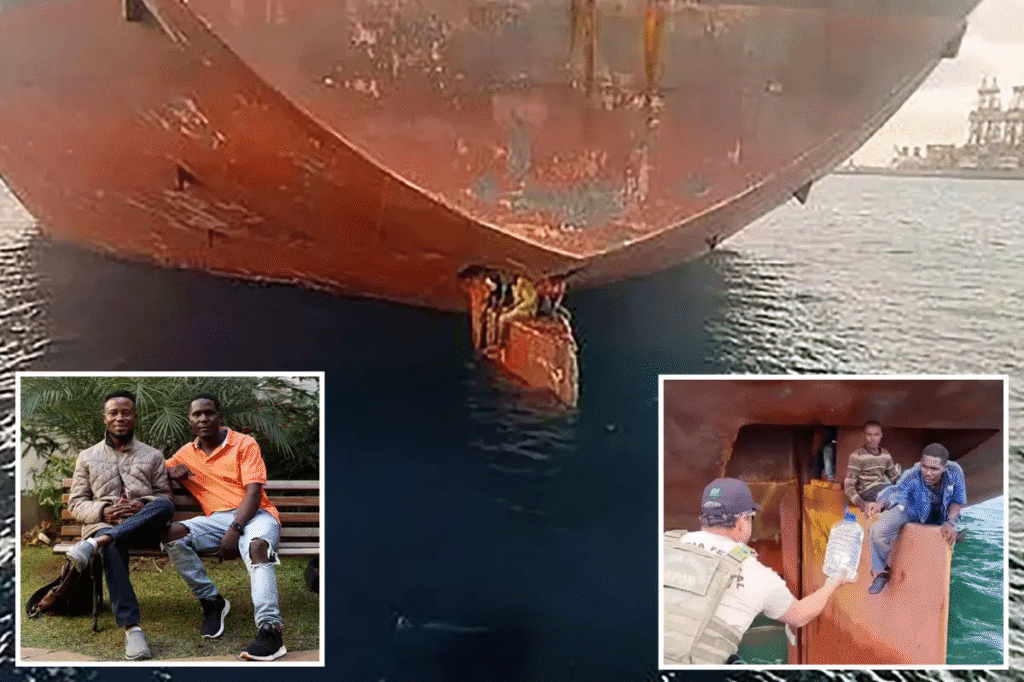
Once aboard the Alithini II, the three men had to contend with the harshest of conditions. Their survival was a delicate balance of hope, endurance, and sheer willpower, as they hid just above the waterline, clinging to the rudder of the ship. This was no ordinary ship’s rudder—it was a small, narrow metal structure, constantly exposed to the elements. Beneath them, the endless expanse of the ocean churned violently as waves crashed against the hull. With every wave, they risked being swept away into the unforgiving sea.
Their only source of protection from the sea was the narrow strip of metal they clung to, a space no wider than a few inches. The ship’s rudder, which is designed to steer the vessel, offered no shelter, no comfort, and little respite from the cold. The freezing nights, filled with bone-chilling winds, were their greatest adversary. With no shelter to shield them from the elements, they were at the mercy of the sea, exposed to both the intense heat of the day and the bitter cold of the night.
For 11 days, these three men hung on, fighting hunger, exhaustion, and dehydration. The harsh reality of their situation was compounded by the fear of being discovered by the ship’s crew or, even worse, slipping into the ocean and drowning. The rudder’s narrow surface left little room for movement. They could not stand, sit, or sleep comfortably. Every hour became a test of endurance, and their strength was gradually worn down by the endless struggle to stay alive.
Food and water were scarce. They had almost nothing to eat during those 11 days, and the small sips of water they managed to find barely quenched their thirst. With no protection against the elements, they became dehydrated, their bodies weakened by exposure and lack of nutrition. Yet despite these unimaginable conditions, the three men clung to the hope that they would survive. Their dreams of reaching Europe—of finding a better life—kept them going.
The Dangers of the Atlantic: A Sea of Despair
The Atlantic Ocean is one of the world’s largest and most treacherous bodies of water. For centuries, it has claimed the lives of those brave enough to cross it. While many migrants make the journey by boat or raft, the three men on the Alithini II were forced to face the sea in the most perilous way imaginable: clinging to the rudder of a massive ship.
The journey they undertook was incredibly dangerous. In addition to the risk of drowning, the three men had to contend with violent waves, unpredictable weather, and the constant threat of being discovered. The sea around them was both their lifeline and their greatest enemy. Every wave that crashed against the ship threatened to toss them into the water, where their chances of survival would be slim to none.
Throughout their ordeal, the men had to rely on their instincts and the will to survive. There was no room for error, no time to waste. Each day was a battle against exhaustion, hunger, and the overwhelming fear of slipping into the abyss below. Their only connection to the outside world was the ship itself, moving relentlessly forward on its journey across the Atlantic.
Rescue: A Miraculous Survival
On the 11th day of their journey, as the Alithini II reached Las Palmas in Spain’s Canary Islands, the men’s ordeal came to an end. By this time, they were severely dehydrated, weakened by exposure, and on the brink of collapse. Yet, they were alive. They had survived the impossible.
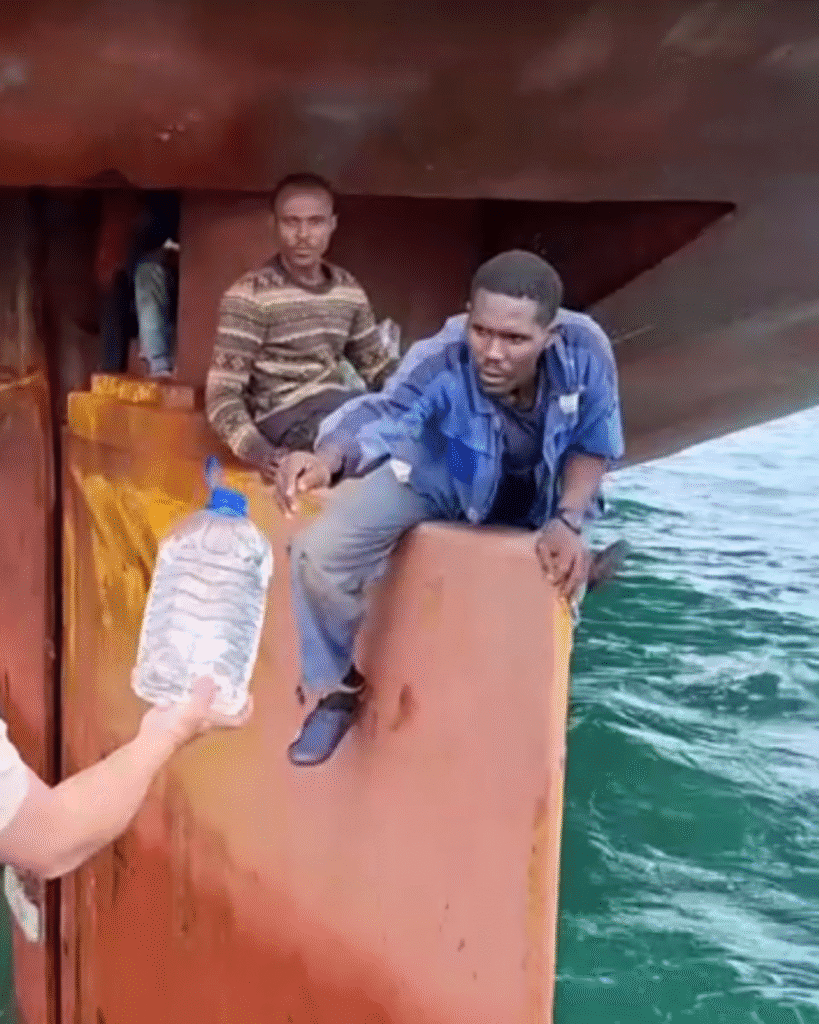
Spanish coast guards, who were monitoring the ship’s arrival, spotted the three men, barely visible above the waterline, clinging to the rudder. Their physical condition was dire. Thin, dehydrated, and barely conscious, the men were quickly pulled from their precarious perch by the rescuers. Their miraculous survival left the coast guards in awe. The men’s determination and their sheer will to survive in the face of overwhelming odds were nothing short of extraordinary.
The men were taken to safety, given medical attention, and slowly recovered from their ordeal. Their journey was over, but their story was just beginning to unfold. The survival of these three men was a testament to the incredible lengths people will go to in pursuit of a better life. It was a quiet, but powerful, statement about human resilience, hope, and the unrelenting desire to overcome adversity.
The Broader Context: A Tale of Migration and Desperation
The story of these three men is not an isolated incident. Every year, thousands of migrants embark on dangerous journeys across the Mediterranean, the Atlantic, and other treacherous seas in search of a better life in Europe. Many of them come from Africa, fleeing poverty, war, and persecution in their home countries. Their stories often go untold, but they are part of a larger narrative about migration, human rights, and the global refugee crisis.
The journey these men undertook was fraught with unimaginable danger, but it also sheds light on the desperation faced by millions of people seeking refuge in Europe. The global migration crisis is a complex issue, shaped by economic inequality, conflict, and environmental changes. For many, the promise of a better life in Europe is worth any risk, even the risk of death.
In recent years, Europe has seen a rise in the number of migrants attempting to reach its shores. Governments have struggled to address the issue, with many turning to increasingly restrictive policies in an attempt to stem the flow of refugees. However, stories like that of these three men highlight the lengths to which migrants will go when they see no other option.
A Testament to Hope: The Human Spirit
At its core, the story of these three men is a testament to the resilience of the human spirit. Against all odds, they survived a perilous journey that many would not have dared to undertake. Their survival was not just a physical triumph—it was an emotional and psychological victory as well.
For them, the dream of a better life in Europe was worth the risk. It was worth fighting against hunger, exhaustion, and the crushing fear of the sea. It was worth enduring days of isolation and pain, clinging to the hope that one day, they would be free from the hardships that had driven them to take such an incredible risk.
Their survival is a story of courage, perseverance, and the will to survive. It is a story that reminds us of the lengths people will go to when they are in search of something better—a story that highlights the power of hope and determination, even in the most desperate of circumstances.