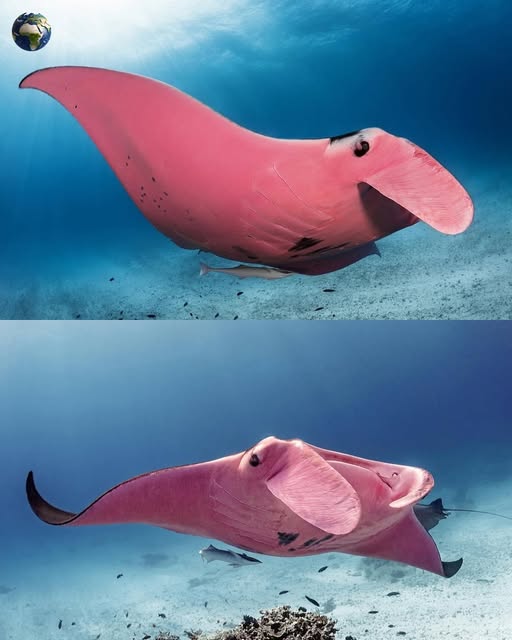

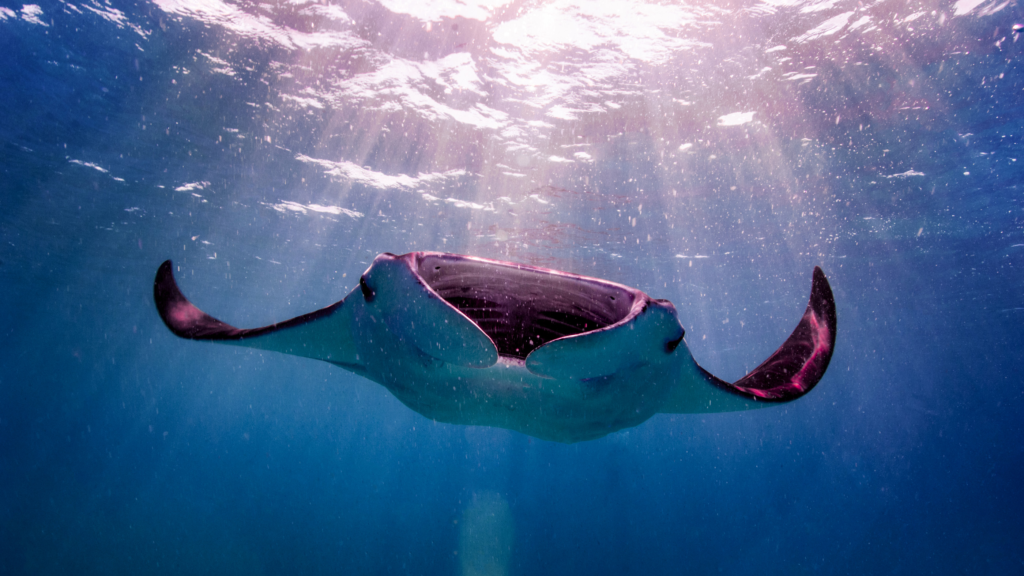
The first time he appeared, people thought it was a trick of the light — a shadow slipping over the coral, too smooth and too graceful to be real. Then the sun caught his wings. Three meters wide, moving like a slow heartbeat, he passed overhead.
It wasn’t a submarine. It wasn’t a ray of sunlight. It was a reef manta — and someone, in a moment of quiet joy, named him Inspector Clouseau.
Part 1: The Legend of Clouseau
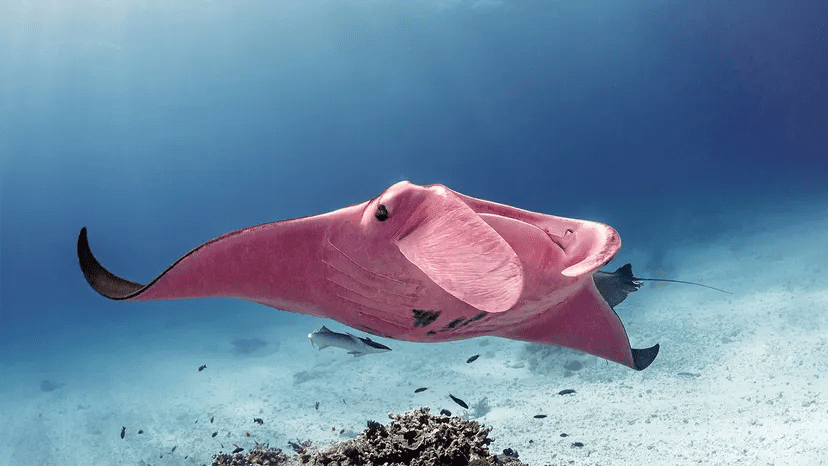
In the depths of the Great Barrier Reef, where the coral thrives and the ocean teems with life, something truly extraordinary was captured on film. It wasn’t a rare fish or a fleeting shark — it was the appearance of a creature so graceful, so captivating, that it seemed to glide through the water as though it were a spirit.
This moment, caught on camera in 2015 by a diver off Lady Elliot Island, , introduced the world to a manta ray unlike any other. The creature’s elegance, combined with its mysterious and almost majestic presence, immediately earned it a name that would spread across the oceanic community like wildfire: Inspector Clouseau.
Clouseau wasn’t just any manta ray. This particular reef manta (Mobula alfredi) stood out not only for its size — nearly 3 meters across — but also for its behavior and the way it moved. It was clear that this manta wasn’t simply swimming; it was exploring, observing, and engaging with the world around it in a manner that was almost human-like in its curiosity.
Part 2: Understanding Reef Mantas
Before diving deeper into Clouseau’s extraordinary story, it’s important to understand the creature itself. Reef mantas are part of the Mobula genus, and they are distinguished by their broad, triangular wings that give them the appearance of flying rather than swimming. But unlike their distant cousin, the oceanic manta, reef mantas are smaller, yet equally fascinating.
Mantas are filter feeders, a term that doesn’t immediately convey the elegance with which they work. The manta’s cephalic fins, those curled “horns” on either side of its mouth, are one of its most remarkable features. These fins are used to funnel plankton-rich water into the manta’s mouth, allowing it to feast on the tiny life forms in the ocean’s currents.
What makes mantas so mesmerizing is the way they move. They are often seen gliding through the water in slow, deliberate motions, their large wings flapping gently to propel them forward. Their grace is unlike any other sea creature.
But what makes Clouseau unique is his interaction with his environment and his behavior that sets him apart from the typical reef manta.
Part 3: Clouseau’s Curious Behavior
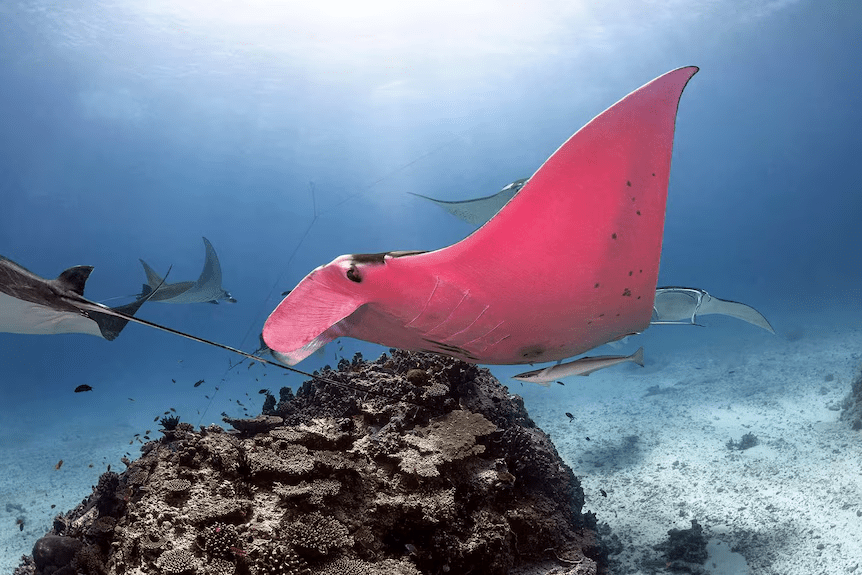
One of the most extraordinary aspects of Clouseau’s personality is his behavior. Reef mantas are often solitary creatures, yet Clouseau has been observed moving through the reefs with a remarkable curiosity, often stopping to hover above coral gardens and other areas, as if deeply engaged in his surroundings. Unlike most marine animals, who follow routine patterns, Clouseau seems to explore each nook and cranny of his environment.
He’s also frequently seen visiting cleaning stations. These are locations where cleaner fish remove parasites and dead skin from larger marine creatures, and Clouseau, with his huge, graceful wings, hovers perfectly still while the cleaner fish go to work. This “spa time,” as some divers call it, can last for several minutes or even hours. It’s a rare sight to witness such a vulnerable and trusting creature allowing other species to interact with them in this way.
What is most remarkable about Clouseau is that he appears aware of his surroundings. Divers and marine biologists have observed him gazing back at them, seemingly aware of their presence and watching them with the same curiosity they show him. This behavior hints at the possibility that mantas, and Clouseau in particular, possess self-awareness and intelligence that is not yet fully understood.
Part 4: The Intelligence of Manta Rays
The intelligence of manta rays is a subject of increasing interest in marine biology. With the largest brain-to-body ratio of any fish, mantas have demonstrated behaviors that suggest cognitive abilities far beyond simple instincts. Studies have shown that manta rays are capable of problem-solving, communication, and even self-recognition, a trait that is considered a hallmark of higher intelligence in the animal kingdom.
In a groundbreaking study conducted in 2011, scientists discovered that manta rays could recognize themselves in a mirror, something that many animals, including some primates, struggle to do. This ability is linked to the understanding of the self, and suggests that manta rays, including Clouseau, may have a level of consciousness that allows them to recognize and navigate their environment in ways previously thought to be reserved only for the most intelligent creatures.
For divers and marine researchers, these findings are both fascinating and humbling. When Clouseau drifts past, seemingly aware of the human observers, it’s not just the mystery of the creature’s grace that captivates — it’s the possibility that Clouseau, in his quiet way, understands the world around him in a way that we have yet to fully comprehend.
Part 5: The Reef in Crisis
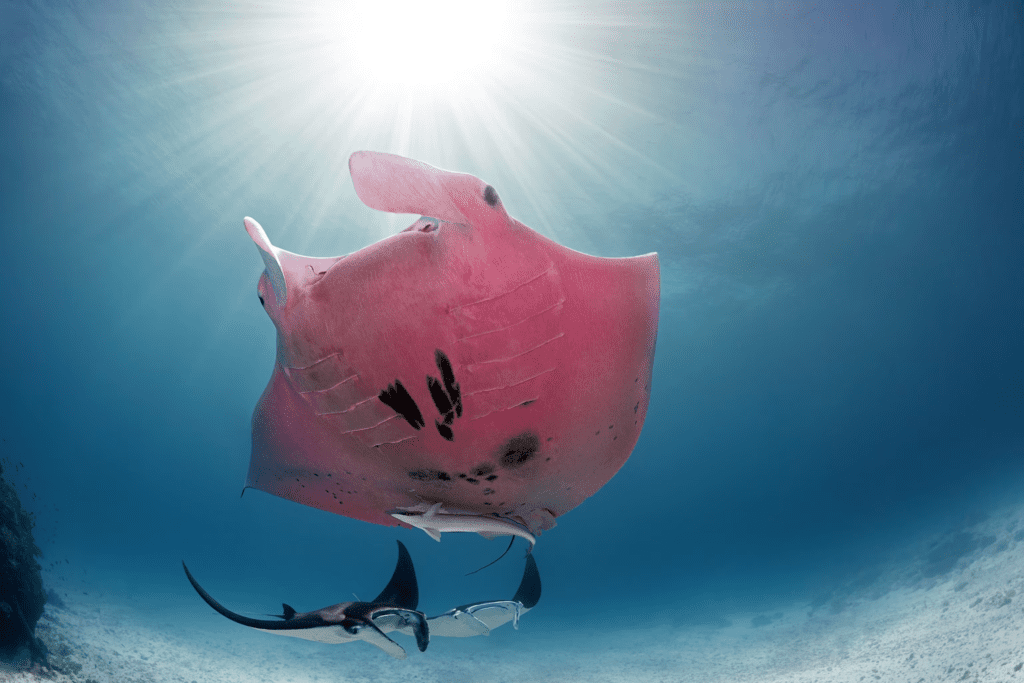
Clouseau’s presence in the Great Barrier Reef is more than just a spectacle — it’s a symbol of the fragile beauty that still exists in our oceans, even as they face unprecedented challenges. The Great Barrier Reef, once a sprawling expanse of vibrant coral and marine life, is now under threat due to rising ocean temperatures, pollution, and coral bleaching.
While Clouseau and other reef mantas continue to thrive in the reef’s protected areas, the coral system itself is facing extreme stress. Increased water temperatures have caused widespread coral bleaching, and many of the reef’s most delicate inhabitants are being pushed to the brink of survival. For creatures like Clouseau, the pressure of climate change and pollution is not just a distant concern — it’s an immediate threat to their home.
What makes Clouseau’s continued presence in the reef so remarkable is that it reminds us of the importance of preservation. The reef is still teeming with life, still home to species that inspire awe and wonder. However, it is up to us — through conservation efforts, sustainable practices, and a commitment to protecting our oceans — to ensure that the reef remains a safe haven for generations to come.
Part 6: The Path Forward — Conservation and Hope
As the world comes to terms with the challenges facing our oceans, the story of Inspector Clouseau offers a glimmer of hope. Reef mantas are protected under various conservation programs, and efforts to preserve the Great Barrier Reef are ongoing.
One of the most critical steps in protecting the reef is the creation of marine protected areas (MPAs). These areas are designated zones where human activity is limited, allowing marine life to thrive in relative safety. By supporting MPAs and sustainable fishing practices, we can help mitigate the impact of human activity on the reef.
Additionally, addressing the root causes of climate change, including reducing greenhouse gas emissions and increasing awareness about the importance of ocean health, is essential to securing the future of the reef and the creatures that call it home. By supporting organizations working on marine conservation, contributing to research on ocean health, and making informed choices in our daily lives, we can all contribute to the protection of the oceans.
Inspector Clouseau is not just a manta ray; he is a symbol of the mysteries and wonders that still exist in the world’s oceans. He is a reminder that there is beauty to be found, even in the face of overwhelming challenges. But his survival, and the survival of countless other species like him, depends on our collective action.
It’s time for us to recognize the urgency of protecting our oceans, to take meaningful steps to reduce our environmental footprint, and to support conservation efforts that can ensure that Clouseau’s graceful glide through the Great Barrier Reef remains a part of our world for generations to come.
The ocean is full of untold stories, and Inspector Clouseau is one of its most beautiful. But as we watch him soar through the waves, we are reminded of the importance of preserving this magic — and of the role each of us can play in ensuring that this wonder never fades from our world.