
The Forgotten Hero: Martin Couney and His Revolutionary Incubators for Premature Babies
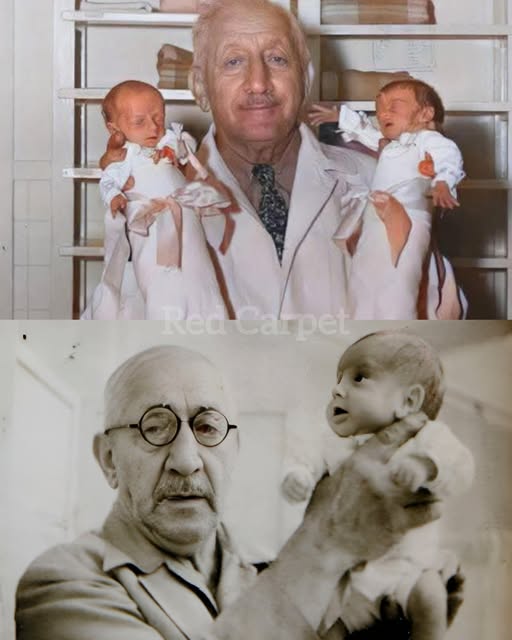
In a world where medical science was struggling to save premature babies, one man’s vision stood as a beacon of hope amidst skepticism, ridicule, and bureaucratic resistance. Martin Couney, a name that might not ring many bells, was, in many ways, the father of neonatal care. Yet, despite his success in saving thousands of lives, Couney never held a medical degree, never received formal recognition, and was often labeled as a charlatan. His story is one of perseverance, compassion, and defiance against the norms that once condemned the most fragile lives.
A Humble Beginning
Martin Couney’s origins are somewhat mysterious. Born around 1870 in Germany, he likely emigrated to the United States in the late 19th century. Little is known about his formal training or background, with no records to confirm his medical education or professional certifications. Nevertheless, Couney became fixated on an idea — saving premature infants, those fragile souls who were often abandoned to die due to their vulnerability.
In the 1800s, premature babies were often considered too weak to survive. Hospitals and doctors at the time simply didn’t know how to treat them. The prevailing belief was that nature should take its course. In many cases, if a baby was born prematurely, there were no attempts to save it. Doctors, who themselves were not equipped to handle such delicate cases, would resign to the notion that “it was God’s will.” There was no help, no effort, and no medical intervention.
However, one man saw this as an opportunity to save lives, to defy fate, and to challenge an uncaring system. Martin Couney sought to bring change where others saw none. Inspired by the work of French doctor Stéphane Tarnier, who invented the first incubator to keep premature infants alive, Couney decided to take matters into his own hands.
The Children’s Hatchery: Birth of a Revolutionary Idea
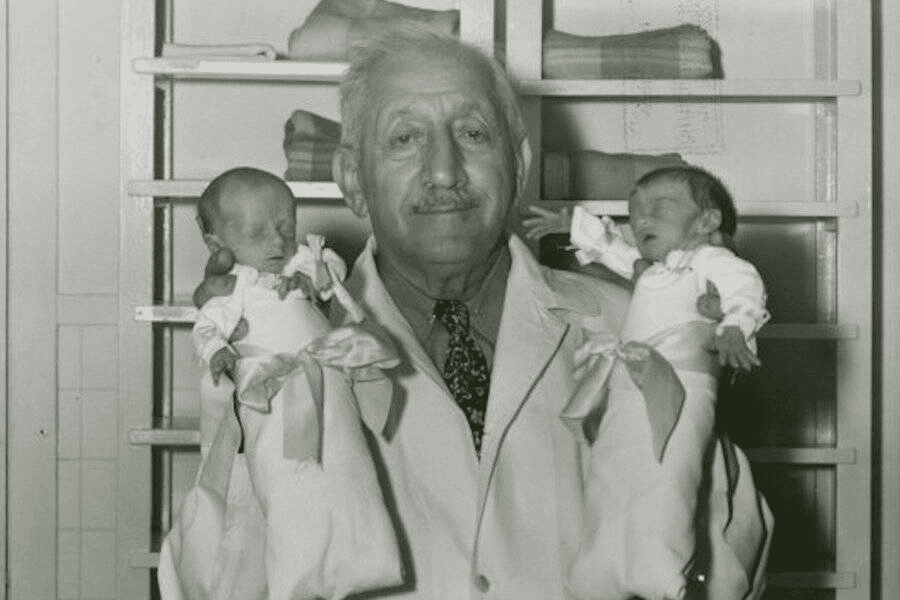
Couney’s first public demonstration of his concept came at the 1896 Berlin Exposition. He made an outrageous decision: he placed actual premature infants into incubators and displayed them for all to see. The public was mesmerized, and the spectacle of fragile babies inside these glass chambers shocked, awed, and even angered some. Doctors scoffed, dismissing the idea as a sideshow. However, the onlookers could not look away. They saw these tiny lives surviving, something they had never witnessed before.
Couney was unbowed by the criticism. He wasn’t simply performing a show; he was trying to save lives. He often explained his mission with one simple but profound statement: “Don’t fear the spectacle. Fear the silence. The silence is what kills your child.”
His “Kinderbrutanstalt” (Children’s Hatchery) was born — a medical marvel where the impossible was made possible. Babies that doctors had given up on were now surviving under Couney’s care. His goal was not fame or fortune; it was survival. He was relentless in his mission, working day and night to ensure that no infant born prematurely would be left to die.
From Berlin to Coney Island: The World Took Notice
Couney’s revolutionary work soon took him from Berlin to London, then to the United States, and eventually, to one of the most unexpected places: Coney Island. Amidst the bustle of amusement parks, cotton candy stands, and roller coasters, he built an exhibition showcasing his incubators. The sign in front of his building read, “All the World Loves Babies.” Inside, the public could witness babies, some only a few pounds in weight, thriving in incubators — fragile but alive.
The visitors who walked through the doors paid a 25-cent admission fee, while parents of the babies paid nothing. The money collected from the ticket sales was used to fund the nurses, maintain the incubators, and provide the round-the-clock care that was necessary to keep the babies alive. It was an unusual method, but it was the only way to fund the care for the infants, many of whom had no other hope.
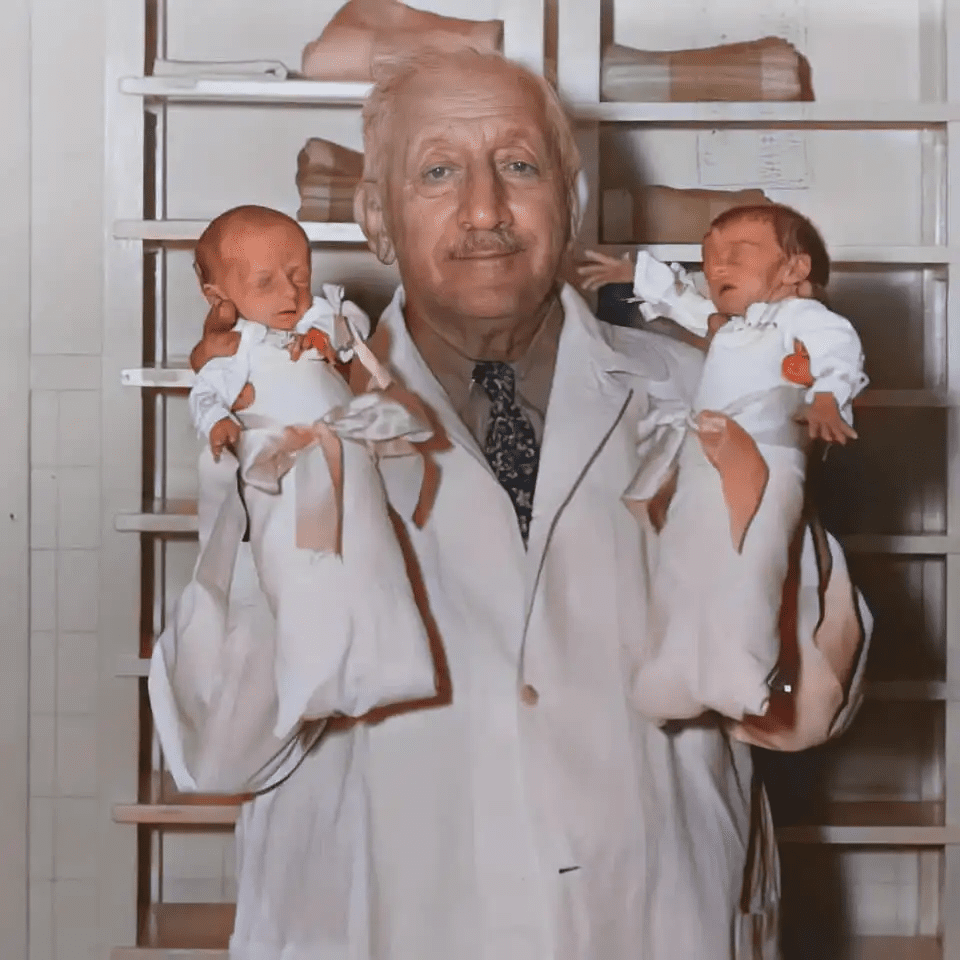
Though he faced significant opposition from medical authorities, Couney didn’t back down. Even when some called him a fraud, he simply pointed to the babies who had survived under his care. His work at Coney Island continued for over four decades, running from 1903 to 1943. During this time, more than 7,000 babies were saved thanks to his tireless effort.
Saving Lives Against All Odds
Couney’s work was not without its detractors. He was often accused of exploiting the babies for profit. The Society for the Prevention of Cruelty to Children attempted to shut him down on several occasions, but Couney refused to give up. He never fought back with anger or malice. Instead, he simply pointed to the results. “Look at them. They live,” he would say. “That is my answer.”
His impact on the medical field was profound, even if it wasn’t immediately acknowledged. Medical professionals who initially mocked him later sent premature babies to his exhibit, asking him to care for them. Prominent figures in the field of neonatal care, such as Julius Hess, the father of American neonatology, and Arnold Gesell, a developmental psychologist, eventually recognized Couney’s contributions.
But despite his groundbreaking work, Couney never received the formal recognition he deserved. He was never awarded honorary degrees or medical accolades. He never had the respect of the established medical community. But that never deterred him. He continued his work for over 40 years, saving thousands of babies who otherwise would have been left to die.
The Legacy of Martin Couney
When Martin Couney passed away in 1950, the American medical community had still not fully embraced his ideas. However, in the years that followed, hospitals began to open specialized units for premature babies, adopting the technology and methods that Couney had pioneered. His work laid the foundation for modern neonatal care.
Couney’s legacy is not just in the thousands of lives he saved, but in the way he challenged a system that had ignored the most vulnerable. His compassion for the babies that the world had discarded became his true calling. In a world that often rejected the weak, Couney never gave up. His story reminds us of the power of compassion, the value of perseverance, and the difference one person can make in the face of adversity.
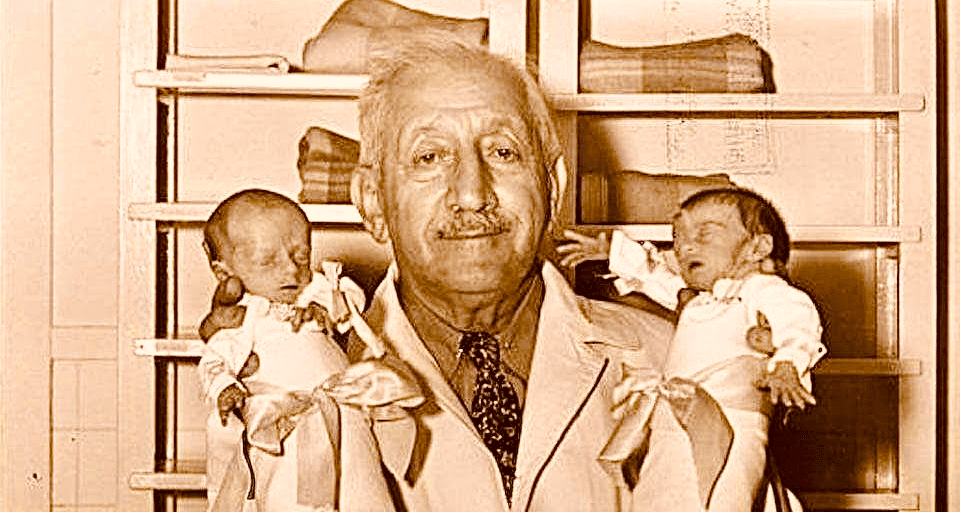
As one of his former patients, a woman who had been saved at just two pounds, said at the age of 70: “I owe my life to a man who wasn’t even a real doctor. The world judged him. I am living proof he was right.”
Martin Couney may never have had letters after his name, but he had something far rarer: a deep, unshakable belief in the sanctity of life. His legacy lives on, not just in the babies he saved, but in the millions of lives that continue to be saved thanks to the incubators and methods he pioneered. His work helped to revolutionize neonatal care, and in doing so, he gave countless premature babies the chance to live.
His defiance in the face of opposition and his unrelenting compassion for the most vulnerable lives on as a reminder of the power of one person’s conviction to change the course of history.