
A Bold Stand for Seattle’s Communities
Seattle has always been a city that prides itself on progress, innovation, and inclusivity. However, amidst the bustling economy and rapid growth, certain issues have been slipping through the cracks. One of the most significant challenges that have recently come to the forefront is the rise of food deserts in the city, particularly in low-income neighborhoods. These areas, where access to fresh, affordable groceries is limited, are facing the looming threat of even more grocery store closures, a situation exacerbated by the decisions of large corporations prioritizing profit over the well-being of local communities.
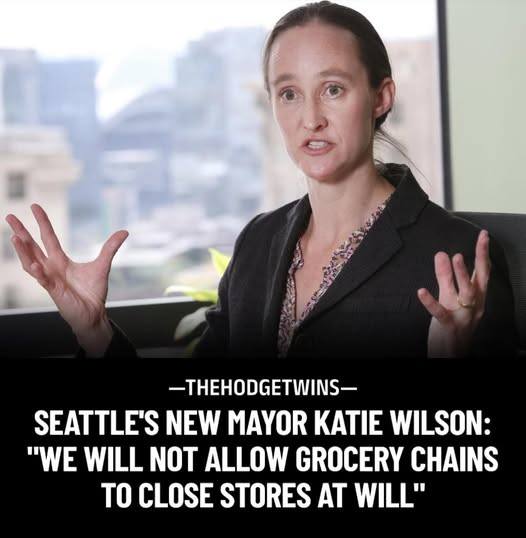
Enter Mayor Katie Wilson, the newly elected leader of Seattle, who has made it her mission to put an end to the practice of grocery store closures in underserved neighborhoods. “We will not allow grocery chains to close stores at will,” Wilson declared in a recent statement, making it clear that she is committed to protecting the interests of the city’s most vulnerable residents.
Wilson’s stance has sparked a wide range of reactions, but the core of her argument is clear: corporations should not be allowed to make decisions that hurt entire communities, and it’s the role of local government to step in and stop these closures.
The Growing Problem of Food Deserts
Food deserts have become a significant issue across the United States, but Seattle has seen an alarming rise in these areas, particularly in neighborhoods with large low-income populations. A food desert is defined as an area where access to affordable and nutritious food is limited, often due to a lack of grocery stores, farmers’ markets, and other healthy food options. For many residents, this means relying on fast food chains, corner stores, or convenience stores that stock unhealthy, processed foods—contributing to poor nutrition, health disparities, and chronic conditions such as diabetes and heart disease.
In Seattle, food deserts are not just a problem of poverty. They are a result of systemic decisions made by major grocery chains that choose to close stores in lower-income areas due to perceived low profitability. As a result, residents are left with fewer options, and the local economy suffers as well. The problem is not just about food—it’s about access to resources, jobs, and health, all of which are tied to the presence of grocery stores in these neighborhoods.
The problem has been worsening in Seattle as large grocery chains like Safeway, QFC, and Whole Foods have closed several stores in areas with lower profit margins. These closures not only leave residents without access to healthy food but also lead to job losses, further contributing to economic instability in these neighborhoods. Without these essential resources, people are forced to travel long distances to find fresh food, adding unnecessary financial and physical burdens.
Wilson’s approach to tackling these closures highlights the need to consider not just economic impact, but the social and community toll that such actions take.
Mayor Wilson’s Response: Holding Corporations Accountable
Mayor Katie Wilson has been vocal about her belief that grocery store chains, particularly large corporations, are not above the law. She argues that these companies have a responsibility to the communities they serve, and when they pull out of neighborhoods, they leave behind more than just empty storefronts—they leave people without vital resources.
“We cannot stand by as corporations make decisions based solely on profit without considering the impact on the people who rely on these stores for their daily needs,” Wilson said. “This is a matter of equity and fairness.”
Wilson’s administration is working to ensure that corporate interests do not trump the needs of the residents. She has proposed a series of measures that would make it difficult for large chains to close stores in low-income neighborhoods without offering a viable plan to replace those services. The measures would include community consultations, financial incentives for stores to stay open, and penalties for chains that close stores without a thorough review process.
Wilson’s vision for Seattle includes proactive measures to support neighborhoods that are losing access to essential services. She has expressed a willingness to introduce regulations that prevent stores from being closed based solely on economic reasons, suggesting that any closure should be met with a community plan to replace the service or ensure residents’ access to food. This policy aims to encourage accountability from corporations, especially those benefiting from urban real estate while neglecting their responsibility to the people they serve.
The Economic and Social Impact of Store Closures
The economic implications of grocery store closures are far-reaching. In addition to making it more difficult for people to access healthy food, the closures also result in job losses, which can create a domino effect throughout the community. For many, the local grocery store is not just a place to shop; it is a source of employment, a hub of social interaction, and a vital part of the local economy.
The loss of grocery stores impacts local businesses that depend on the foot traffic brought by grocery shoppers. Without stores drawing people to these areas, smaller businesses struggle to survive, leading to further economic decline. This vicious cycle of closures can leave entire neighborhoods abandoned and demoralized.
As grocery chains pull out of certain areas, small businesses that rely on foot traffic also suffer, and the neighborhoods lose a sense of community. Moreover, the loss of these stores disproportionately affects vulnerable populations, such as low-income families, seniors, and individuals with disabilities, who may not have the means to travel to more affluent neighborhoods to access food.
Wilson’s stance against the closure of grocery stores, then, is not just about protecting food access—it’s about preserving the social fabric and economic health of Seattle’s communities. By ensuring that stores stay open in these underserved areas, Wilson hopes to foster stronger, more resilient neighborhoods that are able to thrive, despite the challenges posed by large corporations and their profit-driven motives.
Corporate Pushback: The Conflict Between Profit and Community Care
While Wilson’s policies have garnered praise from many community groups and residents, they have not been universally welcomed. Critics argue that forcing grocery chains to stay open in neighborhoods where they are not profitable could have unintended consequences. Some business owners worry that these regulations could stifle the free market and deter future investment in Seattle.
One such critic is Greg Hayes, a regional spokesperson for Safeway, who argues that grocery chains should be allowed to make decisions based on market demands. “If we are forced to keep stores open that are not financially viable, we could be in a situation where businesses are struggling to survive, which benefits no one,” Hayes said in a recent interview.
While Wilson’s policies have garnered praise from many community groups and residents, they have not been universally welcomed. Critics argue that forcing grocery chains to stay open in neighborhoods where they are not profitable could have unintended consequences. Some business owners worry that these regulations could stifle the free market and deter future investment in Seattle.
One such critic is Greg Hayes, a regional spokesperson for Safeway, who argues that grocery chains should be allowed to make decisions based on market demands. “If we are forced to keep stores open that are not financially viable, we could be in a situation where businesses are struggling to survive, which benefits no one,” Hayes said in a recent interview.
Wilson’s administration is working to provide financial incentives, such as tax breaks and grants, to help these local businesses thrive. She has also proposed partnerships between local grocery stores and community organizations, which could help strengthen these businesses and ensure that they are able to provide healthy food to residents at affordable prices.
Furthermore, Wilson is exploring opportunities to create urban farming programs and farmers’ markets in areas where grocery stores are scarce. These initiatives aim to not only provide fresh food but also empower communities by giving them more control over their food sources. By creating local solutions to food access, Wilson hopes to build a more sustainable and resilient city, where the needs of the community take precedence over corporate interests.
The Long-Term Vision: Building a More Equitable City
Mayor Wilson’s fight against grocery store closures and food deserts is just one part of her broader vision for a more equitable Seattle. By addressing the food access issue head-on, Wilson is laying the groundwork for a city where all residents, regardless of their income or background, have access to the resources they need to live healthy and fulfilling lives.
Wilson’s policies are grounded in the belief that strong communities are built on the principles of equity, accessibility, and mutual support. If her vision is realized, Seattle could serve as a model for other cities grappling with similar issues, showing that it is possible to prioritize people over profit and create an environment where businesses and communities can both flourish.
Moreover, by tackling food deserts and corporate influence, Wilson is addressing the larger issue of social and economic inequality. Her policies aim to ensure that marginalized communities are not left behind in the city’s rapid development, but rather are supported and included in Seattle’s future.
Conclusion: A Call for Action

Mayor Katie Wilson’s firm stance on preventing grocery store closures in low-income neighborhoods highlights a crucial issue facing cities across the United States. While corporations often prioritize profit over people, Wilson’s approach calls for a reimagining of what it means to be a responsible corporate citizen. In her vision, businesses are not just profit-making entities—they are active participants in the well-being of the communities they serve.
For Seattle, this is just the beginning. The policies introduced by Mayor Wilson have the potential to reshape the city’s relationship with corporate interests, setting a precedent for other cities to follow. However, the fight is far from over, and continued activism, community involvement, and policy advocacy will be necessary to ensure that the needs of all residents, particularly the most vulnerable, are met.
As this issue continues to unfold, it’s clear that Mayor Wilson’s leadership will be instrumental in shaping Seattle’s future. Her commitment to addressing food deserts and holding corporations accountable could very well be the start of a broader movement toward more socially responsible business practices in cities across the nation.
Call to Action:
Want to support Mayor Katie Wilson’s efforts to protect food access and fight grocery store closures in Seattle? Join the conversation and get involved in advocating for equitable policies in your own community. Together, we can create a future where every neighborhood has access to the healthy food and resources it needs to thrive.