
In the high-stakes world of politics and public service, even the most careful and composed individuals are susceptible to mistakes. However, it is how these leaders handle their errors that truly defines their character. One such moment occurred with President Barack Obama during his time in office, an incident that many found both heartwarming and telling of his leadership style.
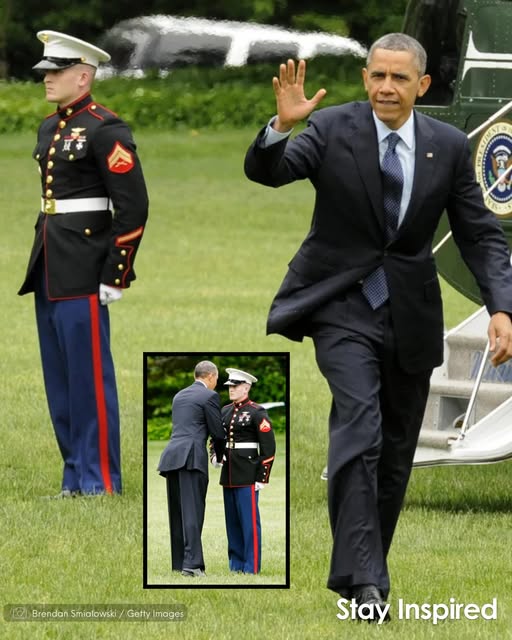
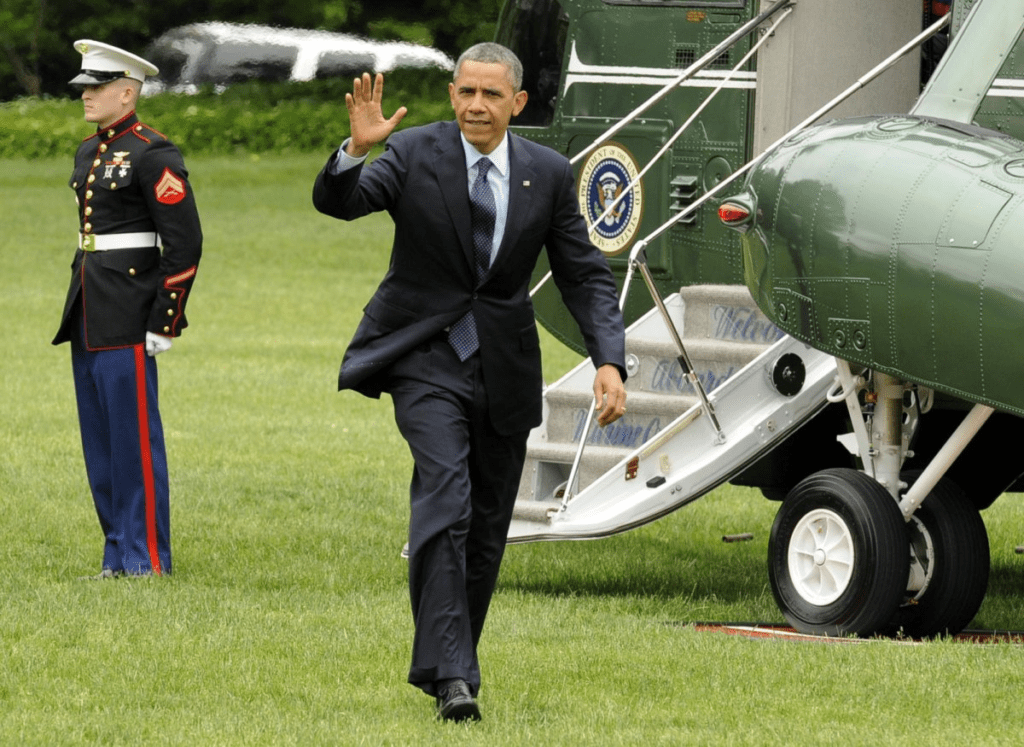
While en route to deliver a commencement speech at the U.S. Naval Academy, President Obama made a rare mistake. As he boarded Marine One, the presidential helicopter, he failed to return a salute from a Marine standing guard. Saluting the President is a long-standing military tradition, and typically, the President returns the salute as a sign of respect for the service and sacrifice of military personnel. In this case, however, President Obama did not follow this tradition.
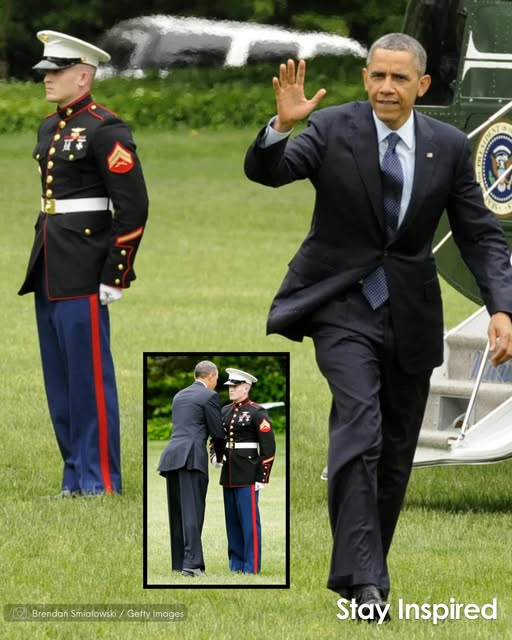
But what made this moment truly special wasn’t the mistake itself—it was how President Obama chose to correct it. Upon realizing his error, rather than ignoring it or brushing it off, the President took swift action to right the wrong. He waved to the pilot of Marine One, and then, without hesitation, he made his way back down the stairs of the helicopter to shake the marine’s hand and apologize personally.
This simple but significant gesture of humility left a lasting impact on both the Marine and those who witnessed the exchange. It served as a powerful reminder of the importance of respect, accountability, and leadership. In a world where public figures often feel untouchable, President Obama’s willingness to admit a mistake and make amends demonstrated the qualities that elevate a leader in the eyes of their people.
The Significance of the Salute: More Than Just a Gesture
In the military, a salute is much more than a polite greeting—it is a symbol of respect, loyalty, and acknowledgment. For a Marine to salute the President of the United States, the highest-ranking official in the country, it is a deeply ingrained tradition that reinforces the relationship between the Commander-in-Chief and the armed forces.
The act of saluting is a gesture that signifies mutual respect and recognition of authority, sacrifice, and commitment. For the President, returning that salute is equally important as it affirms his respect for the service members who dedicate their lives to the defense of the nation. This mutual respect strengthens the bond between the military and the executive office, reinforcing a sense of unity and shared purpose.
By failing to return the salute, President Obama momentarily disrupted this tradition. While the mistake may have seemed small in the grand scheme of things, for the Marine who stood at attention, it could have been seen as a slight—a missed opportunity for acknowledgment and respect.
However, President Obama’s decision to address the error immediately shows the depth of his understanding of the symbolism behind the salute. By returning to the Marine and offering a personal apology, the President reasserted the importance of these small, yet meaningful, traditions in maintaining a strong and respectful relationship with the military.
The Power of Admitting Mistakes
In many leadership roles, admitting mistakes is often viewed as a sign of weakness or vulnerability. The expectation is that leaders should be infallible, confident, and always in control. But President Obama’s willingness to acknowledge his mistake, rather than ignore it or make excuses, set him apart as a leader who understood the value of humility.
Acknowledging mistakes is not an easy task, especially for someone in the public eye. There is often pressure to maintain an image of perfection and authority, particularly for those who hold the highest office in the land. Yet, in this moment, President Obama demonstrated that true strength lies not in avoiding mistakes but in how one addresses them.
Leaders who own up to their errors, who show a willingness to admit when they are wrong, build trust and credibility with their followers. It signals to others that they are human and approachable, not above reproach. This kind of transparency fosters a culture of honesty and accountability, which is crucial for any leader who wants to inspire genuine respect and loyalty.
In this case, President Obama’s apology to the Marine was not only an acknowledgment of a minor mistake, but it was also a reminder that even in positions of power, respect for others—regardless of their rank or position—is paramount. His willingness to take the time to correct his mistake showed that no matter how busy or important one may be, it is always worthwhile to make things right when given the chance.
Leaders who own up to their errors, who show a willingness to admit when they are wrong, build trust and credibility with their followers. It signals to others that they are human and approachable, not above reproach. This kind of transparency fosters a culture of honesty and accountability, which is crucial for any leader who wants to inspire genuine respect and loyalty.
In this case, President Obama’s apology to the Marine was not only an acknowledgment of a minor mistake, but it was also a reminder that even in positions of power, respect for others—regardless of their rank or position—is paramount. His willingness to take the time to correct his mistake showed that no matter how busy or important one may be, it is always worthwhile to make things right when given the chance.
The Impact on the Marine

While the incident may have seemed like a small, personal exchange between the President and the Marine, the significance of the moment was not lost on the individual involved. Imagine being a young Marine, standing guard at Marine One, when the most powerful person in the world walks right past you without returning your salute. For many, this could have been a moment of disappointment or even embarrassment.
But for this Marine, the President’s actions would have undoubtedly left a lasting impression. After realizing his mistake, President Obama made sure to go out of his way to return and offer an apology. For the Marine, this moment of personal interaction with the President—someone he likely deeply admired—would have been a powerful reminder of the respect and humility that the office of the President should embody.
The apology was not just a symbolic gesture; it was a genuine effort to acknowledge the importance of the Marine’s role and the value of the tradition that had been disrupted. For the Marine, the opportunity to shake the President’s hand and hear him apologize personally would have been a moment of recognition, showing that no matter how small or seemingly insignificant the issue may be, the President still took the time to make things right.
A Lesson for Leaders Everywhere
This simple act of returning to apologize to a Marine holds important lessons for leaders in all walks of life, not just in the political arena. In a world where leaders are often criticized for being too focused on their own image or power, President Obama’s humility and willingness to correct his mistake sent a message that resonates far beyond this particular instance.
In the workplace, for example, leaders who admit when they are wrong and take action to rectify the situation create an environment of trust and respect. They demonstrate that mistakes are a natural part of growth, and that it is more important to take responsibility and make amends than to hide behind pride or ego. This type of leadership fosters loyalty, strengthens relationships, and encourages open communication among teams.
The impact of small, respectful gestures should not be underestimated. In the case of President Obama and the Marine, the apology not only corrected a minor mistake but also reinforced the core values of mutual respect, accountability, and humility—qualities that all great leaders should strive to embody.
The Bigger Picture: Leading by Example
Ultimately, President Obama’s decision to apologize for his mistake was not just about making things right in that particular moment. It was also a lesson in leadership and the importance of setting an example for others to follow. The President’s actions showed that leadership is not about being flawless but about handling mistakes with grace and responsibility.
By taking the time to return and offer a personal apology, President Obama demonstrated that leadership is about more than just giving speeches and making decisions. It’s about embodying the values you expect others to follow. His example of humility and respect serves as a reminder that true leadership is defined not by the absence of errors, but by the willingness to acknowledge them and take action to make things right.
As we move forward in an increasingly complex and interconnected world, we can all learn from President Obama’s example. Whether in our personal lives, workplaces, or communities, we all have the opportunity to lead by example, showing respect for others, admitting when we are wrong, and taking the necessary steps to make amends.
The Power of Humility in Leadership

President Obama’s apology to the Marine is a shining example of leadership at its best. It wasn’t about grand gestures or speeches; it was a simple, heartfelt acknowledgment of a mistake and a gesture of respect. In doing so, the President reaffirmed his commitment to treating others with dignity, regardless of their rank or status.
This moment serves as a reminder that, in the end, it’s not about being perfect but about being accountable, respectful, and humble. Leadership is not just about the decisions you make, but about how you handle the challenges and mistakes along the way. It’s about leading with integrity, and showing others that respect and humility can be powerful tools in fostering genuine connections and trust.
No matter the size of the mistake or the complexity of the situation, leaders who demonstrate humility and take responsibility for their actions create an environment where respect, accountability, and trust thrive. And that, above all, is what makes a true leader.