
Imagine being exposed to freezing temperatures without shelter, battling the cold night after night. For stray dogs in Hungary, this harsh reality is a constant struggle. These innocent animals are often forced to endure the bitter winter without a warm place to sleep or adequate protection.
But in the face of adversity, a group of engineers has come up with an innovative, compassionate solution that is changing the lives of these vulnerable creatures. The solar-heated tunnels that have been designed to keep stray dogs warm during the winter months are not only a technological marvel but a true testament to human empathy.
In this article, we’ll explore how these solar-heated tunnels are revolutionizing the way we think about animal welfare. Through the smart use of materials and engineering, these shelters provide a safe and warm environment for stray dogs. Let’s dive into how Hungary’s creative solution is making a real difference for these animals and how it could inspire a broader movement for animal welfare across the globe.
Section 1: The Problem of Stray Dogs in Winter
Hungary, like many countries in Eastern Europe, faces a growing population of stray dogs. In urban and rural areas alike, countless dogs are left without homes, wandering the streets in search of food, warmth, and protection.
As temperatures plummet during the winter months, these dogs face the cruel reality of trying to survive in freezing conditions. In many cases, stray dogs are forced to sleep outside in snow-covered streets or in abandoned buildings, struggling to stay warm in an environment that’s not designed to keep them safe.
While some cities provide shelters for stray dogs, these resources are often limited and overcrowded. In Hungary, the number of stray dogs has grown to alarming proportions, and the cold winter months only add to their suffering. According to estimates, Hungary is home to thousands of stray dogs, with many living in harsh conditions, especially when the weather turns. These dogs are vulnerable not only to the freezing cold but also to diseases, hunger, and a lack of care.
In this context, finding a solution to protect these animals during the winter is not just about providing shelter; it’s about offering them a chance to survive and thrive in a world that has largely overlooked their needs. That’s where the innovative solar-heated tunnels come into play.
Section 2: Engineering a Compassionate Solution
The idea for solar-heated tunnels emerged from the minds of compassionate engineers and animal welfare activists who were determined to find a way to help stray dogs during the harsh winter months. The solution didn’t involve electric heaters, which could be costly and require constant maintenance. Instead, they designed a system that harnesses the power of the sun—a resource that is both abundant and sustainable.
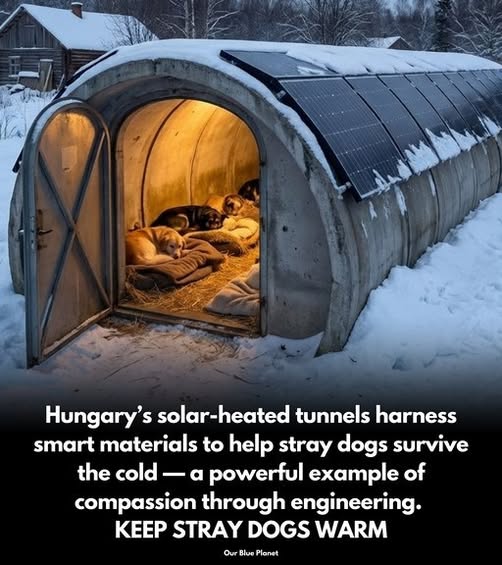
These shelters are built using smart materials that have the ability to absorb and store solar energy during the day. The key design feature of these tunnels is the use of dark, heat-absorbing materials on the exterior, which help to capture sunlight and convert it into heat. Additionally, a thermal-gel layer is incorporated into the design, trapping the heat and slowly releasing it as the temperature drops at night.
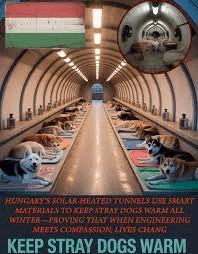
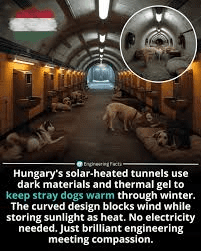
The tunnels have a curved shape that provides insulation, keeping the interior warm and protected from the harsh winds that are common in the winter months. This clever design ensures that the dogs are shielded from the elements, while also creating a cozy space for them to rest.
The best part of this solution is its simplicity. There’s no need for electricity, no complicated maintenance, and no costly bills. The solar-powered system works without the need for any external power source, making it a highly sustainable and cost-effective option. For the stray dogs, it’s a warm, safe haven that doesn’t rely on the limited resources available in traditional shelters.
Section 3: A Day in the Life of a Stray Dog in Hungary’s Solar Tunnel

Picture a stray dog in Hungary on a bitterly cold winter night. The dog, like many others, has spent the day scavenging for food, only to find himself once again searching for a safe place to sleep. The harsh winds blow through the empty streets, and the ground is covered in a layer of snow that makes every step difficult.
Then, the dog spots something different: a solar-heated tunnel, nestled between two buildings. Intrigued, he approaches cautiously, unsure of what he’ll find. Inside, there is warmth—a stark contrast to the freezing conditions outside. The dog enters and curls up on the soft bedding inside the tunnel. As he settles in, he feels the warmth radiating from the walls, a comfort he hasn’t known for months.
The sun’s energy, captured and stored during the day, is now working to keep him safe through the night. The thermal-gel layer ensures that the warmth is evenly distributed, allowing the dog to rest peacefully without the fear of freezing.
This scenario is now a reality for many stray dogs in Hungary. These solar-heated tunnels have provided them with the warmth and comfort they so desperately need, ensuring they can survive the harsh winter months without the constant battle for warmth.
Section 4: Real-World Impact
The solar-heated tunnels have had a profound impact on stray dogs across Hungary and have become a model for other countries. Since their introduction, animal welfare groups in Hungary and other Eastern European nations have adopted the technology, seeing its potential to change the way animals are cared for during the winter.
In Hungary, these shelters have been particularly effective in rural and remote areas, where stray dogs are often left without access to traditional shelters. These tunnels provide a safe refuge for dogs who would otherwise be left to fend for themselves in the cold. They offer a real chance at survival, allowing these animals to endure the winter months with a sense of security and warmth.
Moreover, the solar-heated tunnels are proving to be a viable solution for other animal welfare groups across Eastern Europe. Many of these organizations have struggled with limited resources, and the solar-powered shelters provide an affordable and sustainable alternative to traditional shelters. These shelters require almost no maintenance and have been praised for their low cost and environmental benefits.
The success of these shelters has also inspired similar projects in other countries. Across Europe, animal welfare groups are adopting the solar-heated tunnel model, and some have even begun to scale the technology to accommodate larger groups of animals. The solar tunnels offer a scalable, effective solution for stray dogs around the world, proving that compassion and technology can go hand-in-hand.
Section 5: The Role of Compassion in Engineering
What makes these solar-heated tunnels truly remarkable is the role that compassion played in their creation. Unlike many engineering projects that are driven purely by technical or financial considerations, these tunnels were designed with empathy at their core.
The engineers behind the project didn’t just focus on building something functional; they sought to create a solution that would directly improve the lives of stray dogs. The result is a perfect blend of technology and kindness—a simple yet highly effective shelter that keeps vulnerable animals warm without relying on electricity, costly equipment, or complicated upkeep.
This project serves as a powerful reminder that engineering and technology can be a force for good when guided by compassion. While it may seem like a small-scale solution, the impact on the lives of stray dogs is immeasurable. This story shows that even in an age of rapid technological advancement, the greatest innovations often stem from a deep desire to make the world a better place for those who need it most.
Section 6: Call to Action
As we celebrate the success of Hungary’s solar-heated tunnels, there are ways we can all get involved in supporting animal welfare initiatives. Whether you’re an engineer, an animal lover, or simply someone who believes in making the world a better place, there are many ways to help.
Consider donating to animal shelters that adopt innovative solutions like solar-heated tunnels. Many organizations are looking for funding to expand their efforts and provide more shelters to stray animals. Volunteering at local animal shelters, supporting animal welfare laws, and spreading awareness about such projects can also make a difference.
For those who want to get more involved, look for opportunities to collaborate with organizations that focus on innovative animal care solutions. By supporting these initiatives, you’re helping to create a world where animals aren’t just cared for—they’re cherished and protected, regardless of their circumstances.
Conclusion
In the heart of Hungary, a simple yet groundbreaking solution is giving stray dogs a fighting chance against the brutal winter cold. Solar-heated tunnels are not just shelters—they’re lifelines, offering warmth, safety, and hope to animals that would otherwise be left to struggle in the freezing temperatures.
This project is proof that when technology is guided by compassion, it has the power to change lives for the better. By combining engineering with empathy, Hungary’s solar-heated tunnels are setting a new standard for animal welfare, offering an innovative and sustainable way to protect our furry friends.
As we look toward the future, it’s clear that projects like these are just the beginning. With the right combination of kindness and creativity, we can build a world where all animals, regardless of their circumstances, have a chance to live safely and happily. Let’s continue to support these initiatives and work together to ensure that no animal has to suffer through another cold, lonely winter.