
Barack Obama’s presidency was not just a political event—it was a social and cultural milestone that resonated across America and the world. His presidency marked a new era of hope, equality, and possibility, encapsulated in the rallying cry “Yes We Can.” This powerful slogan became the embodiment of his approach to governance: a belief in the potential for change, in every individual’s power to create a better future, and in the strength of unity.
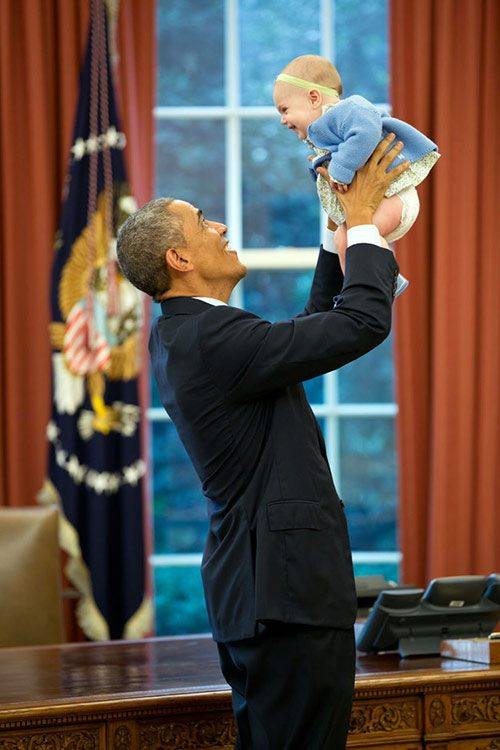
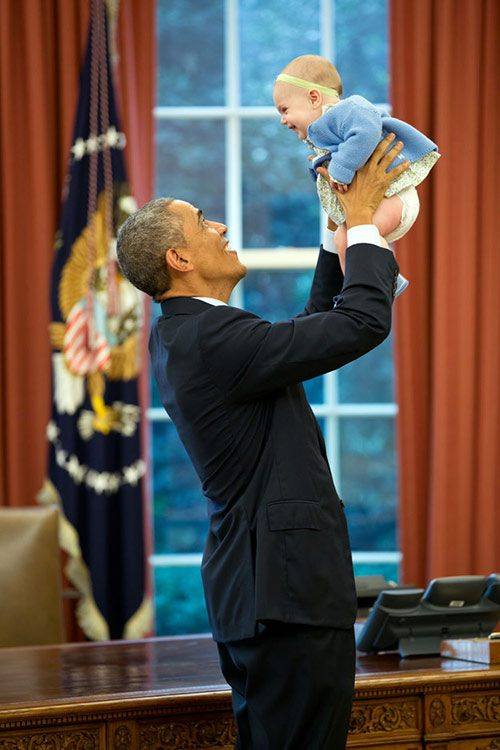
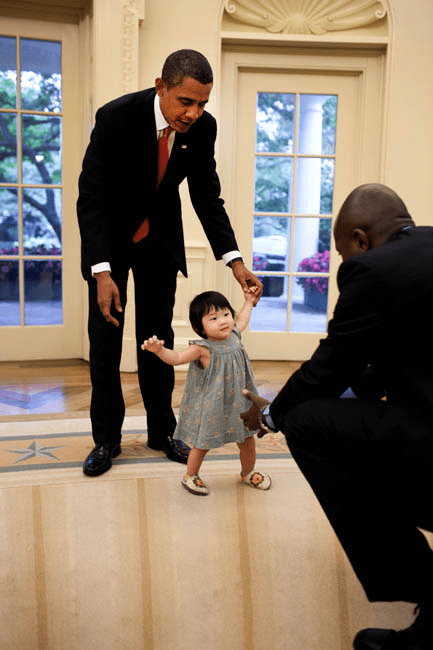
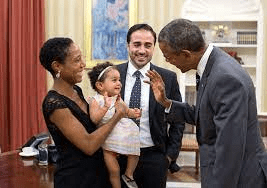
The image of President Obama lifting a baby in his arms, as seen in a touching photograph from the Oval Office, symbolizes more than just a simple act of playfulness. It speaks to the deep sense of responsibility and the human side of leadership that defined Obama’s time in office. In that moment, Obama’s warm smile reflects the care and hope he had for the next generation, a future that he fought to shape with policies, values, and decisions aimed at fostering equality, fairness, and opportunity for all.
In this blog, we will explore the life, presidency, and legacy of Barack Obama, examining his rise to power, the changes he enacted, and the lasting impact he continues to have on American society and beyond. We will dive into his achievements, his leadership style, and the profound influence he has had on generations to come.
1. Obama’s Rise to the Presidency: A Journey of Hope and Change
Barack Obama’s journey to the presidency was a testament to the power of hope, hard work, and determination. Born in Honolulu, Hawaii, to a Kenyan father and an American mother, Obama’s life began as one of cultural and racial diversity—a unique background that would become central to his identity as a leader. Raised by his mother and grandparents, he faced many challenges, including struggles with his identity and navigating a world that often did not know how to categorize him.
Despite these obstacles, Obama excelled academically, earning a law degree from Harvard University. His early career was marked by his work as a community organizer in Chicago, where he worked with low-income communities, fighting for social justice and economic fairness. His time as a state senator in Illinois was a stepping stone, but it was his 2004 keynote address at the Democratic National Convention that truly put him on the map. His speech, full of hope and vision, captivated the nation and set the stage for his 2008 presidential run.
Obama’s victory in 2008 was historic on multiple fronts. As the first African-American to be elected president of the United States, his win symbolized the breaking of racial barriers that had existed in American politics for centuries. His election was not just a political shift—it was a cultural one. It represented the realization of the American dream for many, a dream that was once thought impossible for an African-American man to achieve. His victory inspired millions of people, especially people of color, showing them that no matter where you come from or what your background is, you can rise to the highest office in the land.
2. The Presidency of Change: Obama’s Legacy of Progress
Upon taking office in January 2009, Obama was faced with the worst economic crisis since the Great Depression. The housing market had collapsed, banks were failing, and unemployment was at historic highs. The country was reeling, and it was clear that the new president would have to act swiftly and decisively.
Economic Recovery: The American Recovery and Reinvestment Act
Obama’s first major legislative act as president was the American Recovery and Reinvestment Act of 2009, a $787 billion stimulus package designed to revive the economy. The package included provisions for infrastructure investment, tax cuts, unemployment benefits, and support for key industries such as renewable energy and healthcare. Though controversial at the time, the stimulus helped stave off a deeper recession and eventually contributed to a slow but steady recovery.
The recovery act wasn’t just about numbers and economics—it was about restoring hope. For millions of Americans struggling with job losses and economic uncertainty, Obama’s leadership offered a lifeline. He was not just a leader in the White House, but a figure who represented the resilience of the American people.
Healthcare Reform: The Affordable Care Act
One of the most transformative aspects of Obama’s presidency was the passage of the Affordable Care Act (ACA) in 2010. The ACA, also known as Obamacare, sought to provide affordable healthcare to millions of Americans who were uninsured or underinsured. The law expanded Medicaid, provided subsidies for low-income individuals, and prohibited insurance companies from denying coverage based on pre-existing conditions.
Obama’s push for healthcare reform was met with fierce opposition, especially from conservative lawmakers and healthcare providers. Despite these challenges, Obama’s determination to make healthcare accessible to all Americans remained steadfast. The ACA was a landmark achievement, even though it was not without its flaws. It provided health insurance to millions of previously uninsured Americans and reduced the rate of uninsured individuals to its lowest level in history. Obama’s message was clear: health is a human right, not a privilege for the few.
Championing Social Equality: Advancing LGBT Rights
During his presidency, Obama also became a powerful advocate for social equality, especially in regard to the rights of the LGBT community. In 2015, the Supreme Court ruled in favor of legalizing same-sex marriage across the United States—a historic victory for civil rights. Obama, who had initially expressed hesitancy on the issue, quickly embraced marriage equality, calling it “a victory for America.” His support for LGBT rights helped shift the national conversation, bringing about a culture of acceptance and equality for all.
Obama’s commitment to equality extended beyond LGBT rights. He also took action to address racial inequalities, pushing for police reform and greater accountability in law enforcement. The deaths of African-American men, such as Trayvon Martin, Michael Brown, and Eric Garner, sparked national protests and debates about racial justice. Obama’s leadership in these moments was crucial, as he spoke out about the need for healing, understanding, and reform.
3. Building Trust on the Global Stage: A Compassionate Leader
Obama’s leadership was not confined to domestic issues alone. On the international stage, he sought to rebuild America’s reputation as a leader of diplomacy, peace, and cooperation. After the tumultuous years of the Iraq War and the global financial crisis, Obama’s promise to restore America’s standing in the world was critical.
One of Obama’s most notable achievements was the signing of the Paris Agreement in 2015, a landmark international accord aimed at combating climate change. His commitment to environmental sustainability positioned the United States as a leader in global efforts to tackle the climate crisis. Under his leadership, the U.S. pledged to reduce greenhouse gas emissions and invest in renewable energy technologies.
Obama also worked to improve relationships with nations that had been estranged from the U.S. during previous administrations. His historic opening to Cuba in 2014, marked by the reopening of embassies and the easing of trade restrictions, was a significant diplomatic breakthrough.
Obama’s approach to foreign policy was based on diplomacy, mutual respect, and cooperation. He understood that true leadership required not only strength but also empathy and a commitment to peace. Whether negotiating nuclear disarmament with Iran or fostering trade relations with Asia, Obama sought to leave a positive legacy that would benefit future generations of global citizens.
4. Obama’s Legacy: A Beacon of Hope and Inspiration
Barack Obama’s presidency will be remembered not just for his policy achievements, but for the way he changed the culture of American politics. His calm demeanor, eloquent speeches, and commitment to unity made him one of the most admired leaders in modern history. He led by example, emphasizing the values of hard work, integrity, and the importance of community.
His slogan, “Yes We Can,” resonated deeply with people across the country and around the world. It wasn’t just a campaign slogan—it was a call to action, a reminder that change is possible when people come together with a common purpose. Obama’s presidency inspired a generation of young people to believe that their voices mattered, that they could make a difference in the world, and that progress was always within reach.
Obama’s Vision for the Future: A President for All Generations
The image of Obama lifting a child in the Oval Office is not just a symbolic gesture—it represents his unwavering belief in the importance of the next generation. Throughout his presidency, Obama consistently spoke about the future, urging young people to get involved in public life, to pursue their passions, and to work for a better, fairer society. He understood that his legacy wasn’t just about what he achieved during his time in office, but about what he left behind for future generations.
Conclusion: The Enduring Legacy of Barack Obama
Barack Obama’s presidency marked a moment in history where the American people chose hope over fear, unity over division, and progress over stagnation. His legacy continues to inspire people around the world, reminding us that change is possible when we stand together and fight for what is right.
From his groundbreaking policies to his personal values of kindness, compassion, and equality, Obama’s presidency remains a beacon of hope in a world that continues to face challenges. His example as a leader—a man who rose from humble beginnings, who believed in the power of the people, and who cared deeply for the future—is one that will continue to inspire generations to come.
As we look to the future, let us remember the message Barack Obama instilled in us all: “Yes We Can.” Together, we can continue to create a world that is more just, more compassionate, and more hopeful.