
Introduction: A Moment That Changed Everything
It’s amazing how one simple act of kindness can change everything. At just 10 years old, I was facing one of the hardest challenges in my young life—leukemia. The treatments were tough, and as part of the process, I lost my hair. For a kid, losing your hair is a big deal, especially when it happens for reasons you don’t fully understand. It makes you feel different, and that difference isn’t always easy to handle.
At school, I tried to act like everything was fine. I tried to smile and laugh with my friends, but deep down, it hurt. Some kids laughed when they saw my bald head, not out of meanness, but because they didn’t fully understand what I was going through. I tried to ignore their jokes, to act like it didn’t bother me, but it did. Then one morning, something happened that would change how I felt forever. My teacher, Ms. Carter, did something that completely transformed my experience at school.

The Struggles of Being Different
Being a 10-year-old kid isn’t easy at the best of times. You’re trying to fit in, find your place, and just be a kid. But when you’re diagnosed with leukemia, everything changes. For me, one of the most difficult parts of my treatment wasn’t the medicine or the hospital visits—it was the way people looked at me.
When I first lost my hair, it felt like everyone around me noticed it. I tried not to care, but when you’re only 10, it’s hard to pretend you don’t feel the weight of other people’s stares. Some of the kids at school didn’t know how to react, and a few laughed about how different I looked. It wasn’t their fault—they didn’t understand. But that didn’t make the jokes hurt any less.
I remember one day, sitting in class, hearing the giggles as someone made a joke about my bald head. I tried to keep my head down, hoping no one would notice that I was fighting back tears. Inside, I felt so alone. It wasn’t just about hair. It was about everything else I was going through—being sick, feeling different, and not knowing how to explain it to anyone.
Ms. Carter’s Compassionate Act
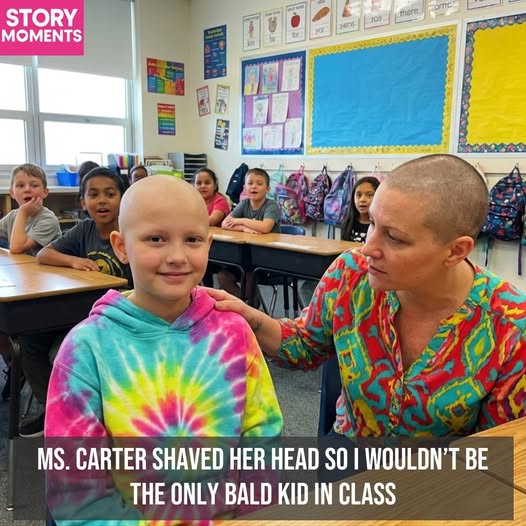
The next morning, when I walked into class, something unexpected happened. Ms. Carter, my teacher, was standing in front of the room, but there was something different about her. She was bald. Completely bald.
At first, I didn’t understand. But as I looked at her, I saw the compassion in her eyes. She wasn’t just trying to get attention; she was doing something that would change how I felt about myself. Ms. Carter had shaved her head. She told us that she wanted to show her support for me. She said that if I could show up every day to class, despite everything I was going through, then she could too. She wanted me to know that I wasn’t alone, that we were in this together.
It was the most selfless, beautiful thing anyone had ever done for me. Ms. Carter didn’t have to do it, but she did. She didn’t just sympathize with me—she empathized. She took a part of herself and gave it up to make me feel understood. In that moment, I knew I wasn’t just the sick kid. I was seen, I was heard, and I was cared for.
The Power of Representation
Ms. Carter’s decision to shave her head was more than just an act of kindness—it was an act of representation. For the first time since I started treatment, I didn’t feel like the only one who was different. I didn’t feel like the only one who had lost something. By shaving her head, Ms. Carter showed me that there was power in being vulnerable, that sometimes, showing solidarity isn’t about doing something big—it’s about doing something that speaks directly to someone’s heart.
Her bald head wasn’t just a symbol of solidarity for me—it was a powerful reminder that we don’t always have to go through life alone. Sometimes, the smallest acts of kindness can bridge the gap between isolation and connection. Ms. Carter’s gesture taught me that kindness isn’t just about helping—it’s about understanding, and that understanding can make all the difference.
The Change in the Classroom
The impact of Ms. Carter’s act was immediate. As I sat in class that morning, the atmosphere in the room shifted. The kids who had laughed or made jokes about my bald head the day before suddenly stopped. The mood in the room became different—not awkward, but supportive. They didn’t just look at me anymore; they looked at me with respect, with understanding. They knew that what Ms. Carter had done wasn’t just about appearance; it was about acknowledging the struggles that many of us face, often silently.
The jokes stopped. The whispers stopped. For the first time since my diagnosis, I didn’t feel like I was the odd one out. I didn’t feel singled out. I felt understood. Ms. Carter’s simple act of shaving her head had changed everything. It had transformed my experience in that classroom and, more importantly, my view of the people around me. I realized that people could be kind, and sometimes, they just needed a little guidance to show that kindness.
What It Means to Be Supported
What Ms. Carter gave me that day was more than just support. She gave me a feeling of belonging. When you’re a child dealing with a serious illness, it’s easy to feel like you’re on the outside, like the world is moving forward without you. You’re stuck in the hospital, stuck with treatments, stuck with the fear of what’s next. You start to wonder if anyone sees you, if anyone cares.
Ms. Carter’s bald head told me that I was seen. It told me that even though I was different, I was still worthy of respect, compassion, and care. She didn’t just offer me sympathy; she gave me solidarity. She made me feel like I wasn’t alone in this journey. That’s what real support is: showing up, standing by someone, and letting them know that they are valued, no matter what they’re going through.
Ms. Carter’s bald head told me that I was seen. It told me that even though I was different, I was still worthy of respect, compassion, and care. She didn’t just offer me sympathy; she gave me solidarity. She made me feel like I wasn’t alone in this journey. That’s what real support is: showing up, standing by someone, and letting them know that they are valued, no matter what they’re going through.
The Ripple Effect: Changing Perspectives
Ms. Carter’s act didn’t just impact me—it changed the entire classroom. When people see someone make a sacrifice like that, it shifts something inside them. I could tell that my classmates looked at me differently. They didn’t see me as the kid with leukemia anymore. They saw me as someone who had a teacher who cared enough to share in my struggle. They saw me as someone who deserved kindness, just like anyone else.
Her act of kindness rippled out into the school, the community, and beyond. The message was clear: it’s not enough to just feel bad for someone. Real empathy requires action. And when you take action, you have the power to change lives. Ms. Carter’s decision to shave her head wasn’t just about showing support for me; it was about teaching others how to truly support someone in need.
The Unspoken Power of Vulnerability
What made Ms. Carter’s act so powerful was that it wasn’t easy. Shaving her head was an act of vulnerability. She didn’t know what kind of reaction she would get from her students, her colleagues, or even her family. She took a risk by making herself vulnerable in a way that most people would shy away from. But in doing so, she showed me—and everyone around her—that vulnerability isn’t a weakness. It’s a strength.
When you open yourself up to others, when you show them that you understand their pain and share in their experiences, you create a bond that’s stronger than any superficial connection. Vulnerability fosters empathy, and empathy is the foundation of meaningful relationships. Ms. Carter’s bald head wasn’t just a symbol of solidarity—it was a symbol of strength.
The Lesson Learned: The Power of Small Acts of Kindness
As a 10-year-old, it’s easy to get caught up in the idea that big gestures are the only ones that matter. But Ms. Carter’s act of shaving her head taught me that sometimes, the smallest acts of kindness can have the biggest impact. Her gesture was simple, but it carried a message so powerful that it changed my entire outlook on life. It taught me that sometimes, it’s the quiet acts of love and understanding that mean the most.
This lesson stayed with me long after the day she walked into class bald. Every time I faced a difficult situation, I remembered her kindness. I remembered how she made me feel like I mattered, even when the world seemed like it was against me. And I realized that I had the power to do the same for others. Small acts of kindness—whether it’s listening, sharing, or standing in solidarity—can make a world of difference.

Rebuilding Confidence: A New Sense of Belonging
Before Ms. Carter shaved her head, I didn’t realize how much my confidence had been shattered. Losing my hair wasn’t just about losing something physical—it was about losing a part of my identity. I felt like I didn’t belong, like I was different in a way that couldn’t be fixed. But when Ms. Carter showed up bald, it was as if she was telling me that I didn’t have to hide anymore. I didn’t have to pretend that it didn’t hurt. She made it okay to be different.
For the first time in months, I felt like I had a place in the world. I wasn’t the sick kid with leukemia anymore. I was just a kid—someone who was loved, accepted, and supported. Ms. Carter’s act helped me rebuild my confidence. She gave me a new sense of belonging that would stay with me throughout my battle with leukemia.
How Acts of Kindness Can Change a Community
What started as a small act of kindness in a classroom had a ripple effect that went far beyond just me. It changed the way my classmates viewed me, and it changed the way I viewed them. It helped me see that kindness isn’t always about grand gestures. Sometimes, it’s the small things that can have the biggest impact.
And it wasn’t just my classmates who were affected. The teachers at my school started to take notice of the way we treated each other. They saw how Ms. Carter’s kindness had created an atmosphere of empathy and understanding. It wasn’t just one act of kindness—it sparked a chain reaction that made our school a more compassionate, supportive place for everyone.
Moving Forward: The Enduring Power of Love
As I reflect on that moment, I realize just how much love can transform a life. Ms. Carter’s simple, beautiful act of shaving her head wasn’t just about showing support for me. It was about showing what real love looks like. She didn’t have to do it, but she did because she cared. And in doing so, she changed my life.
I’ll never forget that day, and I’ll never forget the lesson it taught me: love has the power to heal. When you show up for someone, when you let them know they’re not alone, you make a difference. It’s a lesson I carry with me every day, and it’s one I’ll pass on to others, just as Ms. Carter passed it on to me.

A Teacher’s Lasting Legacy
Ms. Carter’s act of kindness was more than just a gesture—it was a legacy. It’s a legacy of love, understanding, and support. She taught me the importance of showing up for people, even when it’s difficult. She taught me that we are all connected, and that sometimes, the greatest thing we can do for someone is to make them feel seen, heard, and valued.
As I continue my journey through life, I carry her lesson with me: small acts of kindness have the power to change the world. And every day, I strive to do for others what Ms. Carter did for me—to show up, to love, and to make a difference.


