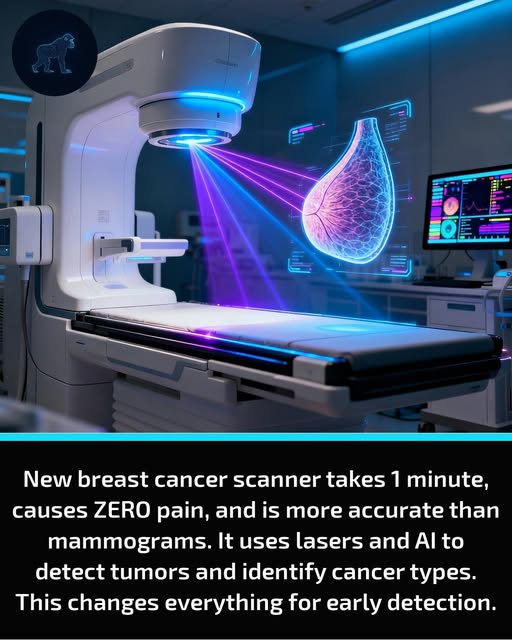

Breast cancer remains one of the most common and feared cancers among women worldwide, with an estimated one in eight women being diagnosed in their lifetime. The advancement of early detection techniques has become crucial to improving survival rates. For years, mammograms have been the gold standard for breast cancer screening, but despite their effectiveness, they come with their own set of challenges — discomfort, anxiety, and the risk of inaccurate results. Now, a groundbreaking breast cancer scanner is changing everything. This new technology offers a solution that’s faster, more accurate, and, most importantly, pain-free. Let’s take a deeper dive into how this new scanner is set to revolutionize the way we detect breast cancer.
The Traditional Mammogram: A Painful Experience
Mammograms have been the standard for breast cancer detection for decades. Women all around the world undergo this screening procedure as part of their routine check-ups, but for many, the experience is far from pleasant. The process involves placing the breast between two plates that compress the tissue in order to get clearer images. While this compression is necessary for obtaining high-quality images, it can cause considerable discomfort or even pain for many women.
For some, the sensation of the breast being compressed is uncomfortable, while for others, it can be excruciating. The pressure applied during the procedure can also lead to anxiety, as it is often perceived as a necessary step before getting a potentially distressing result. For many women, the anxiety surrounding mammograms leads to avoidance of regular screenings, which only exacerbates the problem of late-stage breast cancer detection.
Mammograms, although effective, are not perfect. They are particularly less effective in detecting tumors in women with dense breast tissue, which can obscure tumors and lead to false negatives. False positives can also occur, meaning women may be called back for additional tests or biopsies unnecessarily, causing undue stress and discomfort.
The New Breast Cancer Scanner: The Future of Screening
Enter the new breast cancer scanner — a revolutionary piece of technology that is poised to replace traditional mammograms in many ways. The new scanner uses advanced laser technology and artificial intelligence (AI) to detect breast cancer in a non-invasive, pain-free, and highly accurate manner.
How Does It Work?
Unlike mammograms, this scanner doesn’t require any compression of the breast tissue, making the process significantly more comfortable for the patient. The scanner uses a combination of laser technology and AI to detect tumors. It works by directing low-energy lasers onto the breast tissue, scanning it from different angles, and gathering data about the internal structure of the tissue. The AI component analyzes the collected data in real-time, processing it to identify any potential abnormalities that may indicate the presence of cancer.
One of the most exciting aspects of this new scanner is its speed. The entire process takes just one minute, drastically reducing the amount of time spent in the clinic compared to the longer and often uncomfortable mammogram procedure. Additionally, because there’s no need for compression, the experience is much more relaxed, eliminating a major source of stress for women undergoing the test.

What Makes It Different?
1. Zero Pain, Zero Anxiety
The most significant advantage of this new breast cancer scanner is that it is completely pain-free. Women no longer need to endure the discomfort of breast compression, which has been one of the biggest complaints about traditional mammograms. The new technology makes it easier for women to get tested regularly, without fear of the procedure itself. This could lead to increased participation in breast cancer screenings, which is vital for early detection and better survival rates.
2. Speed and Convenience
The scan is completed in just one minute, a huge improvement over traditional mammograms that can take up to 15 minutes. This makes the process much quicker and more convenient for patients. Additionally, as the scanner is less intrusive, it reduces the need for follow-up appointments, minimizing disruptions to a woman’s daily life.
3. Improved Accuracy
The AI and laser technology that powers this new scanner allows it to detect tumors with incredible precision. Unlike mammograms, which can sometimes miss tumors in dense breast tissue, this new scanner can identify even small abnormalities with greater accuracy. Early trials have shown that the new technology can detect cancer at earlier stages than mammograms, increasing the chances of successful treatment. This improved accuracy also extends to the identification of different types of cancer, which can lead to more personalized and targeted treatment plans.
4. Better Detection in Dense Breast Tissue
Women with dense breast tissue face a greater challenge when it comes to traditional mammograms, as dense tissue can hide tumors, leading to false negatives. The new scanner, however, is far more effective in detecting tumors within dense tissue, providing a much-needed solution for this group of women. It can see through the dense tissue and pick up on even the slightest irregularities, leading to more reliable results.
The Impact of This New Technology on Women’s Health
1. Encouraging Regular Screenings
With the elimination of discomfort and the reduction in time spent in the clinic, this new scanner could encourage more women to undergo regular breast cancer screenings. Many women delay or avoid mammograms due to the fear and pain associated with the process. A pain-free, quick scan could change the way women approach breast health, making screenings a routine part of their healthcare without the dread.
2. Reducing Anxiety Around Breast Cancer
Breast cancer screenings can be a source of significant anxiety, especially for women who fear receiving bad news. The new scanner’s less invasive approach and faster results could alleviate some of this stress. Since the scan takes just one minute, women no longer need to spend long hours in a waiting room, worrying about the potential outcome.
Furthermore, because the scanner is more accurate than mammograms, women will have greater confidence in the results, reducing the anxiety that often accompanies follow-up tests or biopsies caused by false positives.
3. Increased Accessibility
This new technology has the potential to increase the accessibility of breast cancer screenings, especially in underserved areas where mammogram machines may not be readily available. The scanner’s smaller size and less demanding process could make it easier to deploy in mobile clinics or remote locations, allowing more women to access screening services without having to travel long distances or face long waiting times.
The Future of Breast Cancer Detection
This new breast cancer scanner is just the beginning. As technology continues to evolve, we can expect even more advanced innovations in breast cancer detection. The integration of laser technology and AI will likely improve even further, offering faster results, better accuracy, and the potential to detect other forms of cancer.
With the ongoing development of artificial intelligence and machine learning, we may soon have the capability to predict and diagnose breast cancer even earlier than ever before. The ability to identify specific cancer types and tailor treatments based on the scanner’s results could lead to better, more personalized care for women diagnosed with breast cancer.
Conclusion: A New Chapter in Breast Cancer Screening
The new breast cancer scanner is a groundbreaking advancement in medical technology. By eliminating pain, reducing anxiety, and increasing accuracy, it represents a major improvement over traditional mammograms. This technology is more than just a tool for detecting cancer — it’s a game-changer for women’s health.
As more women undergo routine screenings with this new, more comfortable scanner, the hope is that breast cancer will be detected earlier, treated more effectively, and eventually cured. With innovations like this, the future of breast cancer screening is brighter than ever before.